

Thought Leadership
May 25, 2026
Books without Barriers

# Accessibility
# Ally
Disability Visibility

Katie Grennell, PhD.
Breaking Barriers: Disability Visibility
Stories shape how we understand each other—and whose stories get told matters. Disabled voices, like so many other marginalized voices, have too often been overlooked, filtered through others, or left out entirely. Alice Wong’s Disability Visibility responds to that absence, bringing together first-person narratives that center disabled perspectives in all their complexity.
Edited by activist Alice Wong, Disability Visibility: First-Person Stories from the Twenty-First Century is a collection that resists any single narrative about disability. Instead, it brings together a wide range of perspectives—each grounded in lived experience, each challenging the assumptions that often shape how disability is understood. As Wong writes in the introduction, “Disabled people are not a monolith,” a reminder that there is no single way to experience or define disability.
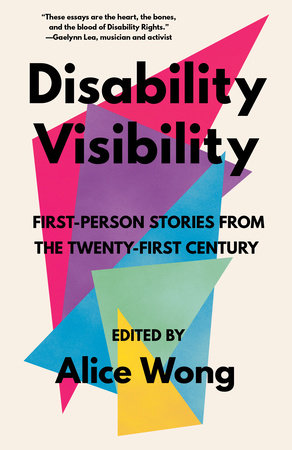
Across the anthology, contributors explore deeply personal and systemic issues alike. Some essays focus on healthcare and survival, like Keah Brown’s reflections on living with cerebral palsy and the importance of self-worth, including her assertion that “I deserve to be here.” Others examine the everyday realities of navigating an inaccessible world, whether through public transit, education, or digital spaces. There are also stories that center culture and identity, such as Haben Girma’s experiences as a Deafblind advocate, as well as pieces that highlight the creativity, joy, and community that exist alongside struggle.
Just as importantly, the collection makes space for what Alice Wong has called “disabled joy”—a form of joy rooted in disabled identity and community, where pride, humor, and connection coexist with, rather than erase, the realities of systemic injustice. In one essay, this sense of joy and self-definition emerges in the idea that disability is not something to be hidden, but “a part of who I am.” Centering disabled joy challenges the notion that disability stories must be defined by struggle alone and underscores what makes these narratives so powerful: their refusal to flatten disability into a single experience or emotion. There is frustration and injustice, but also joy, humor, pride, resistance, and connection. These are not stories filtered for inspiration or comfort; they are told on their own terms.
That distinction matters. Too often, disabled people are included in conversations as examples or symbols, rather than as full participants with authority over their own experiences. Disability Visibility pushes back against that pattern by centering first-person voice—making it clear that representation isn’t just about inclusion, but about authorship, perspective, and truth.
For those of us thinking about access, whether in reading, education, or digital spaces, this is an important reminder. Access isn’t only about removing barriers to entry or providing materials in multiple formats, though those things are essential. It’s also about asking whose perspectives are present and whose are missing and making intentional choices to center those voices.
Books like Disability Visibility expand what access can look like. They challenge us to move beyond a narrow definition of accessibility as logistics and toward a broader, more meaningful understanding rooted in equity and voice. When disabled people are able to tell their own stories, fully, honestly, and on their own terms, we don’t just make reading more accessible. We make our understanding more human, more real, and more complete.
Comments (0)
Popular

Dive in