

Thought Leadership
May 30, 2026
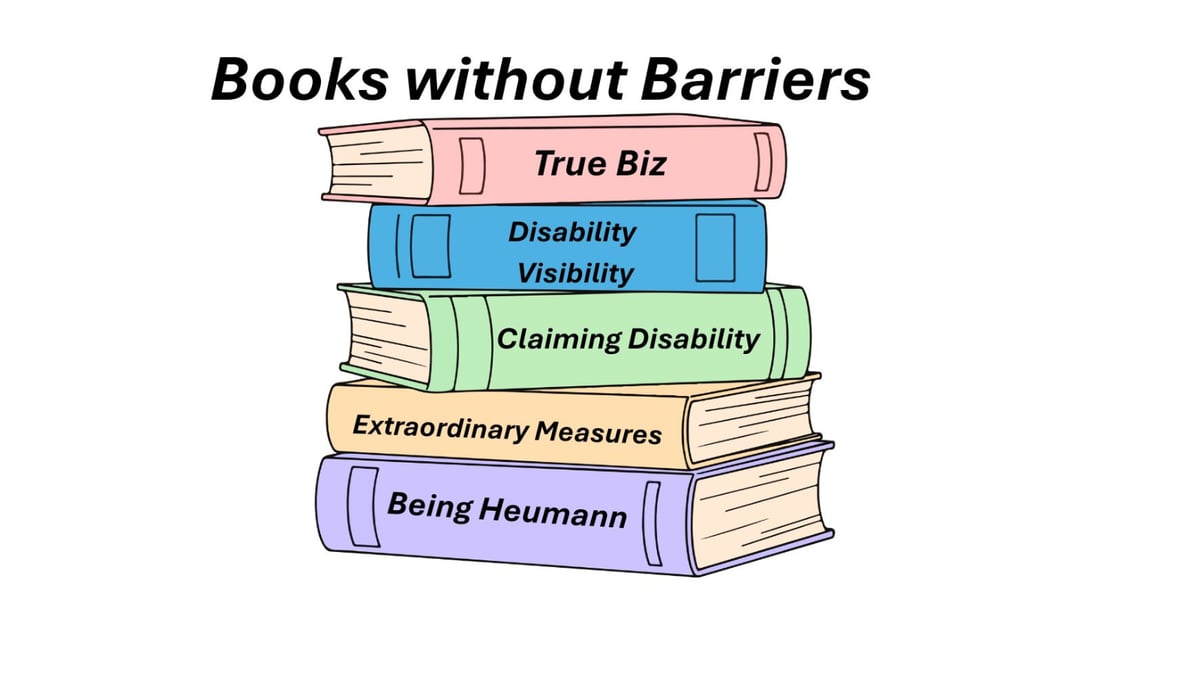
Books without Barriers
# Ally
# Accessibility
The Future is Disabled

Katie Grennell, PhD.
Books without Barriers: The Future is Disabled
There are books that ask you to rethink systems, and there are books that ask you to rethink yourself. The Future Is Disabled: Prophecies, Love Notes, and Mourning Songs by Leah Lakshmi Piepzna-Samarasinha does both, and then goes further. Written during the pandemic, this collection of letters to disabled QTBIPOC (Queer, Trans, Black, Indigenous, People of Color), and grounded in Kimberlé Crenshaw’s concept of intersectionality, which is the theory that overlapping identities like race, disability, gender, and sexuality shape how people experience power and oppression, it asks us to imagine a world not built around scarcity, compliance, or survival, but around disabled brilliance, and gestures toward what Alice Wong, in her own work, describes as disabled joy.
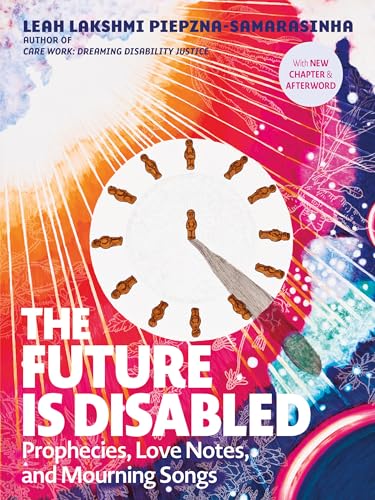
This is not a gentle book. It’s not meant to be. It’s urgent, incisive, and deeply rooted in community. And for me, it felt less like reading a collection of essays and more like being invited into a set of living, breathing conversations about care, access, and the future we are already building.
One of the most striking threads throughout the book is the reframing of disability. Instead of positioning disabled people as problems to solve or accommodate, Piepzna-Samarasinha emphasizes disabled communities as sites of knowledge, creativity, and leadership.
That idea has surfaced again and again throughout this series. In Disability Visibility, Alice Wong centers disabled people as storytellers and cultural critics, reshaping how we understand lived experience as expertise. In Care Work, Piepzna-Samarasinha similarly reframes care as something disabled communities have already been building and sustaining, long before broader society began to value it. Across these and other books in the series, there’s a consistent pushback on the same underlying assumption: that disability is a deficit in need of fixing. Instead, these works ask us to see disability as perspective, as expertise, as a way of understanding and moving through the world that produces insight, not limitation.
The Future Is Disabled takes that foundation and makes it impossible to ignore. In essays reflecting on early pandemic organizing, Piepzna-Samarasinha shows how disabled people mobilized quickly by creating mutual aid networks, sharing access resources, and modeling what collective care could look like under crisis. What many experienced as a sudden shift to remote life was, for disabled communities, an expansion of practices they had already been refining: flexible time, distributed access, showing up for one another in ways that weren’t dependent on proximity or productivity.
Other essays return to the idea of “care webs” and interdependence, not as idealistic aspiration but as infrastructure that is messy, imperfect, and deeply necessary. They also name the tensions within those spaces: burnout, conflict, the uneven distribution of labor. This isn’t a polished vision of the future; it’s an honest one.
And threaded throughout is the concept of access as something creative and relational, what Mia Mingus calls “access intimacy,” and what this book continues to build on. Access isn’t just accommodation paperwork or institutional policy. It’s something people make together, in real time, through attention, trust, and adaptation.
In that context, the “future” of the title feels almost misleading. Again and again, the book points out that these ways of living like moving at crip time, building interdependence, centering care over productivity, already exist. They’ve just been consistently undervalued, dismissed, or ignored.
Reading this alongside the rest of the series, I kept coming back to how consistently our systems teach us to overlook certain kinds of knowledge. Innovation that emerges from disabled communities is often invisible, not because it isn’t there, but because we’ve been conditioned not to recognize it as such. The question isn’t just what we’re missing, it’s how those omissions are built into what we’re taught to value.
What The Future Is Disabled ultimately underscores is that the work isn’t just about adding access or expanding inclusion, it’s about unlearning what we’ve been taught to value in the first place. If our systems are designed to overlook certain kinds of knowledge, then building more accessible futures requires more than retrofitting what already exists. It asks us to shift our starting point. To listen differently. To recognize disabled communities not as an afterthought, but as origin points for innovation, care, and possibility. The future isn’t something we need to invent from scratch, it’s already here. We just have to learn to see it.
Comments (0)
Popular

Popular
Dive in